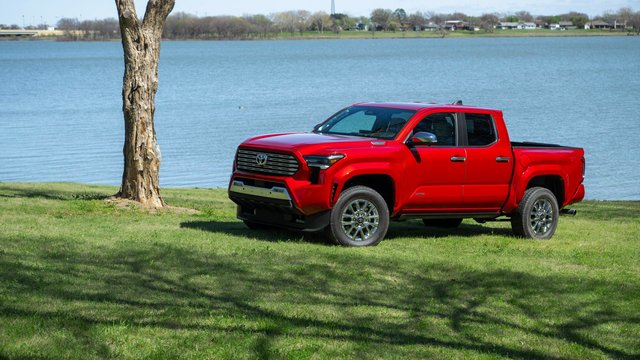
Ontario back roads change fast. Smooth pavement turns to washboard gravel, then to a rutted logging trail, sometimes within the same afternoon. Shoppers looking at the Tacoma Trailhunter want to know if the factory truck can handle that shift without a trip to the parts counter first.
The Trailhunter is built around that question. Every piece on it, from the skid plates to the shock absorbers, is aimed at trail use rather than showroom looks.
What The Trailhunter Actually Is
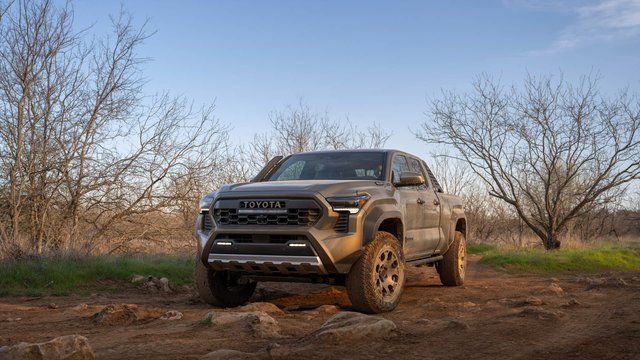
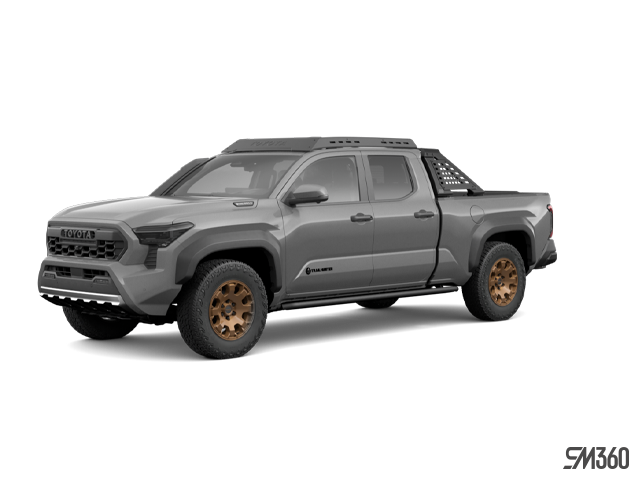
The Trailhunter is one of four Tacoma grades built on the i-FORCE MAX hybrid powertrain, and it starts from the TRD Off Road Premium’s off-road foundation before adding its own hardware. It rides on a 6-ft bed rather than the 5-ft box used by the Limited, TRD Pro, and TRD Off Road Premium hybrid grades.
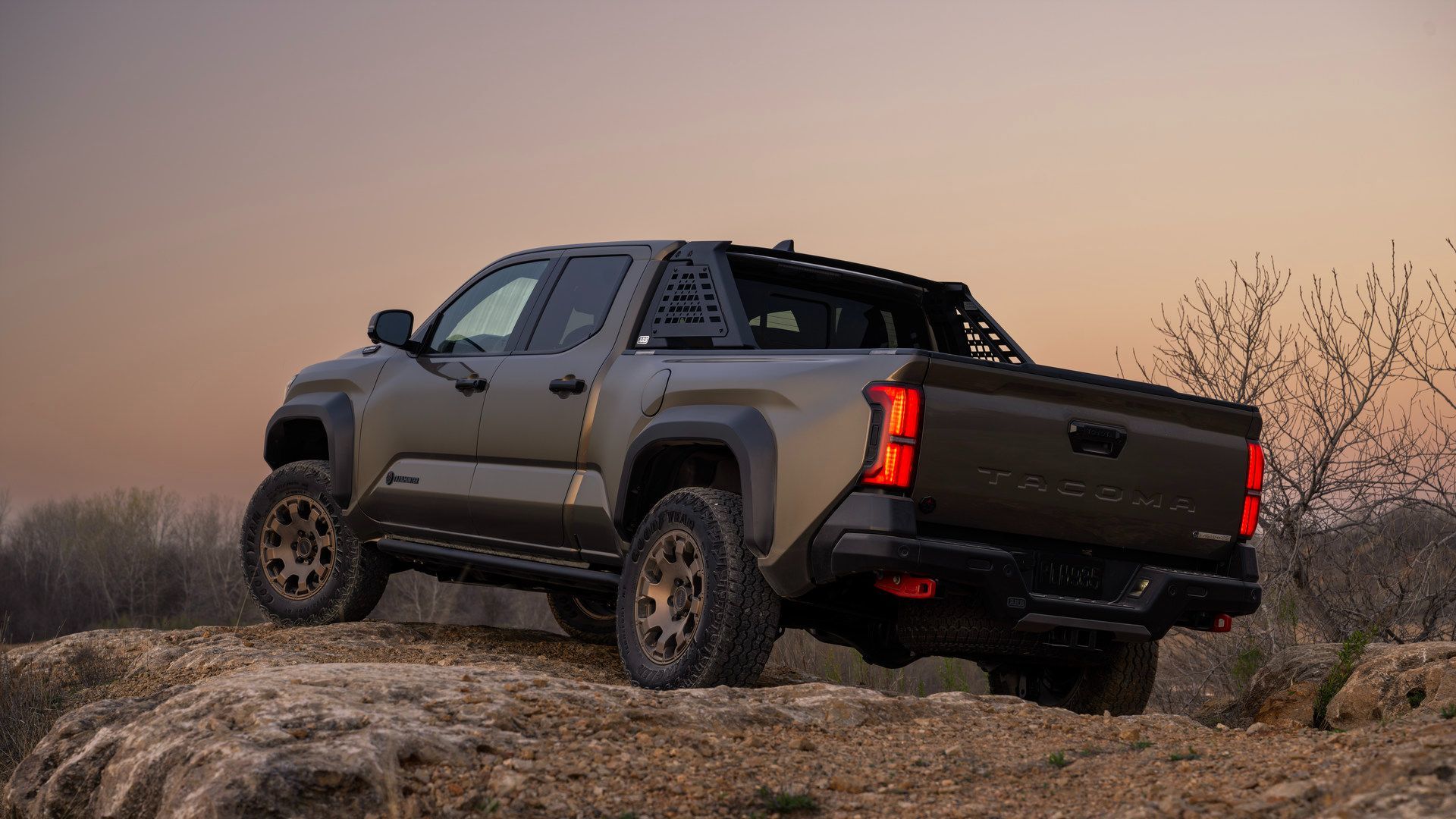
The distinction that matters most is standard equipment versus optional add-ons. On the Trailhunter, hot stamped steel skid plates cover the front end, transfer case, and rear underside as factory equipment. Rock rails, an ARB steel rear bumper with two red recovery hooks, front red recovery hooks, and a front stabilizer disconnect mechanism are also standard, not dealer-installed extras.
|
Trailhunter Hardware
|
Status
|
|
Hot stamped steel skid plates (front, transfer case, rear)
|
Standard
|
|
ARB steel rear bumper w/ 2 red recovery hooks
|
Standard
|
|
Rock rails
|
Standard
|
|
Front stabilizer disconnect mechanism
|
Standard
|
|
Old Man Emu shock absorbers
|
Standard
|
|
Onboard air compressor
|
Standard
|
That list answers the first question most shoppers ask: how much of this truck is trail-ready straight from the factory, versus needing an aftermarket build. On the Trailhunter, the underbody protection and recovery points are already there.
How The Hardware Works Together
The suspension is the piece that determines how a truck actually rides on rough terrain, not just how it looks parked. The Trailhunter uses Old Man Emu shock absorbers, a setup exclusive to this grade among the Tacoma lineup, tuned to soak up repeated impacts from washboard gravel and low-speed rock crawling rather than a single big hit.
Underneath, a locking rear differential and Multi-Terrain Select are both standard, letting the driver match traction response to mud, sand, or loose rock without guessing at throttle input. Crawl Control and Downhill Assist Control are also standard, taking over the throttle and brake work at very low speeds so the driver can focus on steering line instead of pedal modulation.
The part-time 4WD system underneath pairs with the front stabilizer disconnect mechanism, which lets the front sway bar disconnect for more wheel articulation on uneven surfaces, then reconnect for stable on-road handling.
Why The Hybrid Powertrain Matters Off-Pavement
The i-FORCE MAX hybrid pairs a 2.4-litre four-cylinder engine with an electric motor for a combined 326 horsepower and 465 lb-ft of torque, delivered through an 8-speed automatic. Torque, not top-end horsepower, is what matters most at trail speeds, and the hybrid’s electric motor fills in instantly at low RPM.
That matters for towing too: the i-FORCE MAX hybrid is rated to tow up to 5,950 lbs (2,699 kg), useful for hauling a trailer of recovery gear or a small camper to a trailhead. The point isn’t straight-line speed. It’s predictable, low-speed response when a truck is easing over a rock ledge or holding a steady crawl down a loose grade.
The Bed As A Base For Trail Use
The Trailhunter’s 6-ft bed comes with a bed utility bar fitted with removable MOLLE panels, along with bed scene lighting, both standard. The MOLLE panels give a mounting point for recovery straps, traction boards, or camping gear without drilling into the bed itself.
The bed also carries a 2400-watt AC output and four auxiliary switches rated at 95 amps, standard equipment that lets a driver run camp lighting, a fridge, or aftermarket lighting circuits without running a separate power source. Bed width measures 1,136 mm, with a bed depth of 539 mm, enough to keep gear contained on rough ground.
Interior Details For Longer Drives
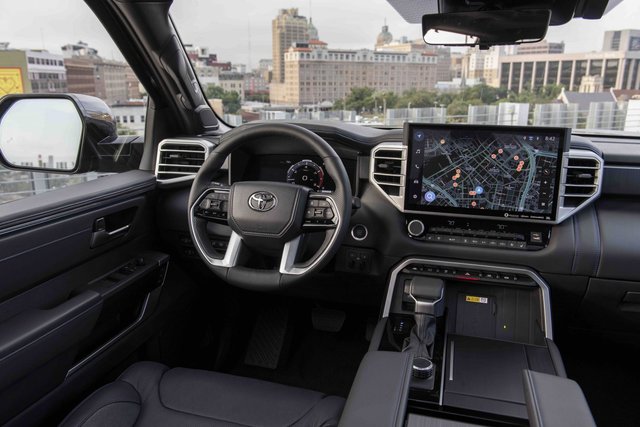
Getting to a trailhead often means an hour or more of highway or backroad driving first, and the Trailhunter’s cabin is built for that stretch too. Heated and ventilated front seats, a heated steering wheel, and dual-zone automatic climate control are all standard, so the drive out doesn’t feel like a compromise before the trail work begins.
A 12.3-inch digital gauge cluster and head-up display keep speed, terrain mode, and navigation prompts visible without looking away from an uneven road. The 14-inch Toyota Multimedia display and 10-speaker JBL audio system round out the cabin, and a digital rearview mirror helps maintain visibility when the bed is loaded with gear that would otherwise block the view out the back glass.
Who The Trailhunter Suits Best
The Trailhunter fits a specific kind of Ontario buyer: someone who actually drives logging roads, cottage-country trails, or backcountry routes on a regular basis, not just once or twice a season. For that driver, having the skid plates, recovery points, and locking differential already installed means less time and money spent building the truck after the sale.
Someone who tows occasionally and wants steady low-speed torque, rather than outright horsepower, will also find the i-FORCE MAX hybrid’s torque delivery well suited to loaded trailer work on gravel or grades. Buyers who mainly stick to paved commuting may find lighter-duty Tacoma grades a better match for their day-to-day use, since much of the Trailhunter’s hardware is built specifically for terrain most daily drivers won’t encounter.
Seeing The Trailhunter In Person
The Tacoma i-FORCE MAX Trailhunter combines factory-installed recovery gear, trail-tuned suspension, and a hybrid powertrain built for low-speed torque rather than straight-line speed. Its standard equipment list is aimed squarely at drivers who put a truck to work off the pavement.
Visit Belleville Toyota in Belleville to see the Trailhunter’s hardware up close and ask about local availability and delivery timing. Book a test drive to check the seating position, sightlines, and low-speed controls for yourself before deciding if this grade fits your routes.