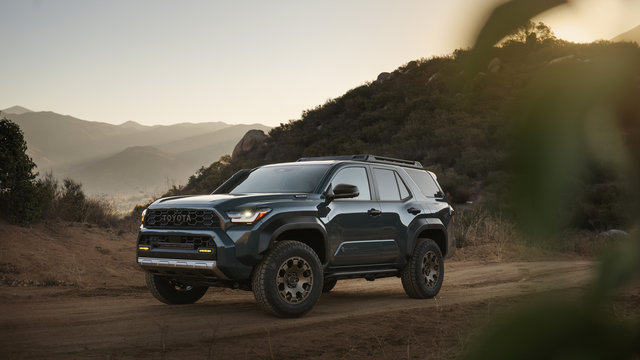
If you’re cross-shopping the 2026 4Runner lineup, the biggest fork in the road isn’t a trim level, it’s the powertrain under the hood. Toyota builds this SUV around two very different engines, and the choice changes how the 4Runner feels on the highway, at the pump, and behind a trailer. For Ontario drivers weighing the Platinum grade, here’s what the i-FORCE MAX hybrid actually changes.
What The I-Force Max Hybrid Actually Is
The i-FORCE MAX is Toyota’s turbocharged hybrid setup for the 4Runner, built around a 2.4 L four-cylinder turbo engine paired with a hybrid-electric assist. In the Hybrid Platinum, it produces 326 hp and 465 lb-ft of torque, paired with an eight-speed automatic transmission and full-time 4WD.
The standard 4Runner gas engine, called i-FORCE, is also a 2.4 L turbo four-cylinder, but without the hybrid hardware. On grades like the SR5 and Limited, it makes 278 hp and 317 lb-ft. Same displacement, same cylinder count, different amount of shove.
How The Hybrid System Changes Driving Feel
The hybrid assist adds torque low in the rev range, which is where a heavy body-on-frame SUV usually feels strained. That’s the source of the 465 lb-ft figure, a jump of 148 lb-ft over the gas engine’s 317 lb-ft.
In practice, this shows up as quicker throttle response when merging onto a highway or passing a slower vehicle, since the electric motor fills in torque before the turbo fully spools. The 8-speed automatic stays the same layout either way; the difference lives entirely in what’s feeding power to them.
Why It Matters For Ontario Drivers
Highway merging and passing confidence matter more on a body-on-frame SUV than on a car-based crossover, simply because there’s more weight to move. The Hybrid Platinum’s extra torque is most noticeable fully loaded, whether that’s passengers, cargo, or a trailer.
Fuel economy tells the other half of the story. The Hybrid Platinum is rated at 10.3 L/100 km city, 9.5 L/100 km highway, and 9.9 L/100 km combined. The gas-powered 4Runner grades post 12.4 L/100 km city, 9.6 L/100 km highway, and 11.2 L/100 km combined. With a shared 72 L fuel tank, that combined difference works out to roughly 130 fewer litres burned per 10,000 km of mixed driving, which matters on a regular commute more than it does on pure highway stretches where the two powertrains land close together.
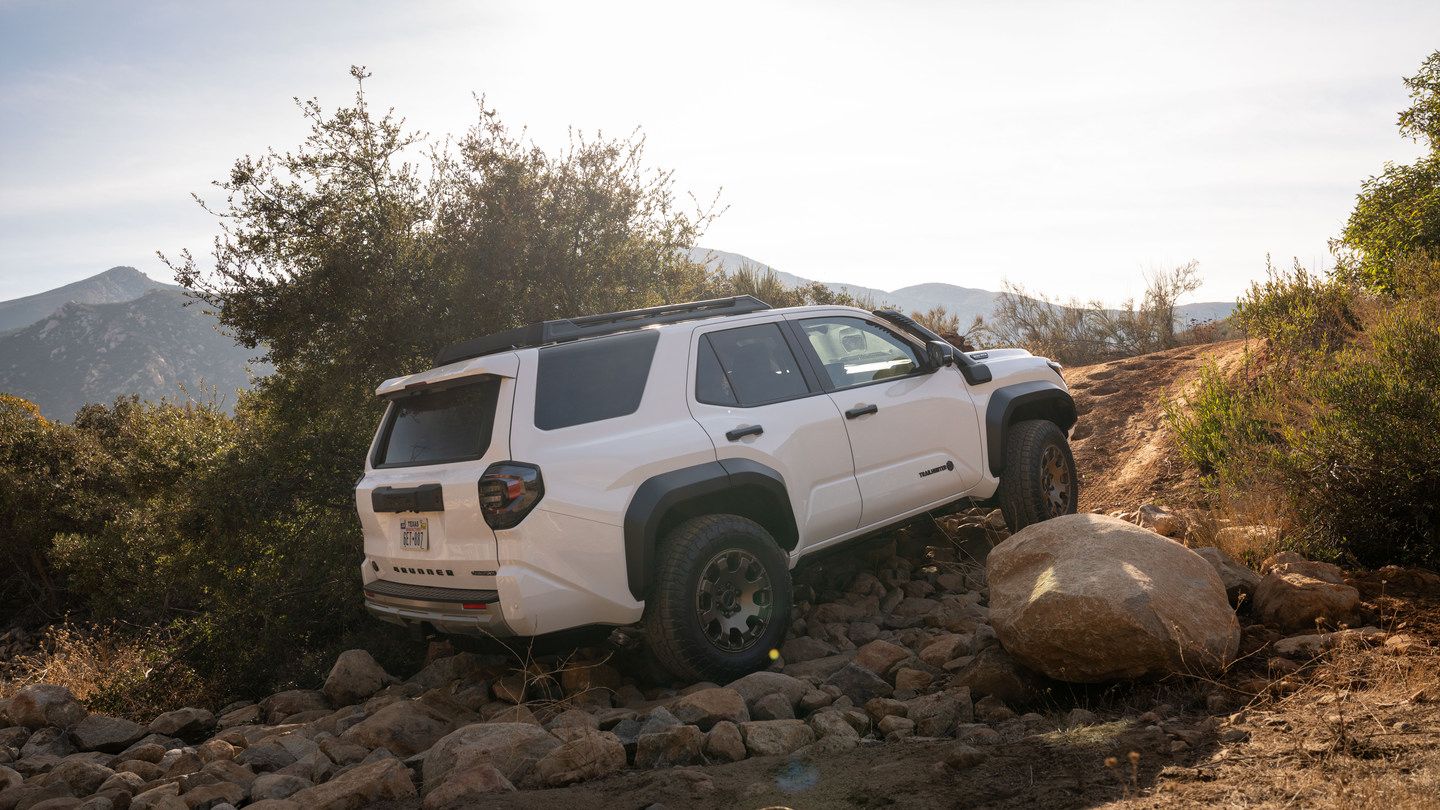
Towing tells a more nuanced story. The i-FORCE MAX hybrid is rated for 5,800 lbs (2,631 kg) of max towing, while the gas i-FORCE is rated higher at 6,000 lbs (2,722 kg). Payload follows the same pattern: 1,195 lbs (542 kg) on the Hybrid Platinum versus 1,230 lbs (558 kg) on gas grades like the SR5 and Limited.
If you’re regularly hauling a heavy trailer to a cottage, the extra torque doesn’t outweigh the lower towing ceiling on paper.
|
Spec
|
i-FORCE MAX Hybrid (Platinum)
|
i-FORCE Gas (SR5/Limited)
|
|
Horsepower
|
326 hp
|
278 hp
|
|
Torque
|
465 lb-ft
|
317 lb-ft
|
|
Max towing
|
5,800 lbs (2,631 kg)
|
6,000 lbs (2,722 kg)
|
|
Payload
|
1,195 lbs (542 kg)
|
1,230 lbs (558 kg)
|
|
Fuel economy, combined
|
9.9 L/100 km
|
11.2 L/100 km
|
Cargo space follows the seating layout more than the powertrain. The Hybrid Platinum is a two-row, five-passenger SUV with 1,206 L behind the rear seats, while the seven-passenger gas grades offer 1,269 L behind their second row. Both share the same 72 L tank, which puts road-trip range mostly down to how efficiently each engine burns that fuel.
Where The Platinum Trim Adds To The Case
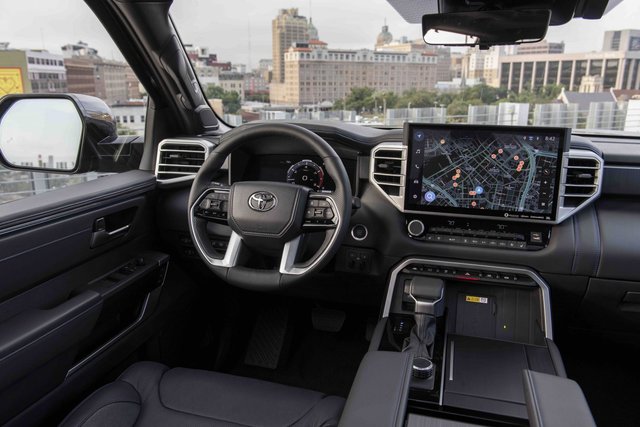
The Hybrid Platinum pairs that powertrain with a cabin built around comfort on longer drives. It includes an 8-way power adjustable driver and passenger seat, heated and ventilated front seats, heated second-row seats, and semi-aniline leather upholstery, along with a driver seat memory system.
Visibility and information tech carry through the trim as well. The Platinum includes a 12.3-inch digital gauge cluster, a head-up display, and the Panoramic View Monitor for tighter parking manoeuvres. Drive Mode Select (Custom, Sport S+, Sport, Eco, and Normal) is standard, along with full-time 4WD and Adaptive Variable Suspension, giving the driver a way to tune throttle response for wet pavement, snow, or rougher surfaces without touching the transfer case.
A trailer brake controller, tow hitch receiver, and Trailer Backup Guide with Straight Path Assist come standard on the Hybrid Platinum, so the towing hardware is ready even though the powertrain’s max rating sits below the gas i-FORCE.
Who Should Choose The Hybrid, And Who Should Stick With Gas
The i-FORCE MAX hybrid fits drivers who spend most of their time commuting, running errands, or driving mixed city and highway routes where the lower combined fuel figure and extra torque pay off daily. It’s also the right call for anyone who wants the smoothest passing power available in the 4Runner lineup, since 326 hp and 465 lb-ft top every gas grade in the range.
The gas i-FORCE still makes sense for buyers whose priority is maximum towing or payload, since it holds the higher rating on both. It’s also the simpler, lighter-touch powertrain if hybrid components aren’t part of what you’re looking for in an SUV built around straightforward mechanicals.
Getting Behind The Wheel Of The 2026 4Runner Hybrid Platinum
The i-FORCE MAX hybrid gives the 2026 4Runner more torque, a better combined fuel economy figure, and a Platinum-level cabin built for longer drives, while the gas i-FORCE still leads on raw towing and payload numbers. Which one fits depends on whether your daily driving or your trailer decides the equation.
Visit Belleville Toyota in Belleville to sit in the 2026 4Runner Hybrid Platinum and feel the difference in person. Contact our team for current details on availability and to schedule your test drive.