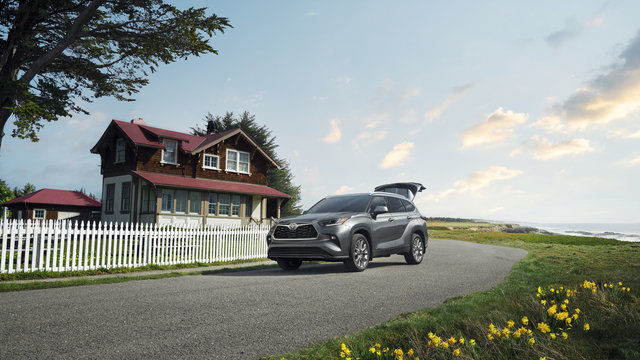
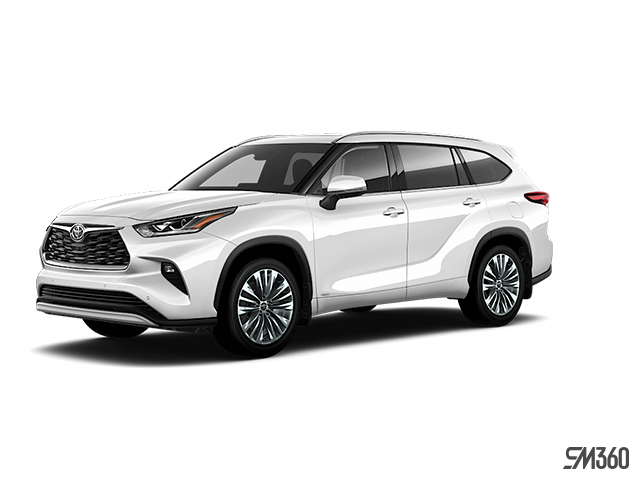
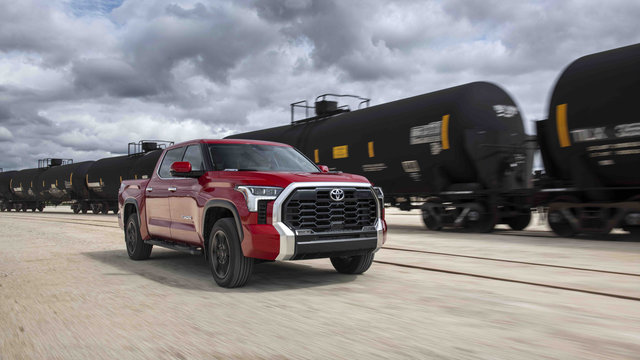
Ontario families shopping for three-row SUVs face a key question: gas or hybrid? The 2026 Toyota Highlander Hybrid answers with an electronic all-wheel-drive system that delivers winter traction while achieving a fuel economy rating of 6.7 L/100 km (city/highway combined). This electronic setup differs from traditional mechanical AWD systems by using a separate, rear-mounted electric motor to power the back axle when needed—no driveshaft connecting front to rear.
The Highlander Hybrid's approach to all-wheel drive reduces mechanical complexity while providing the on-demand traction Belleville drivers need during Ontario winters. Three hybrid grades—XLE AWD, Limited AWD, and Platinum AWD—offer different equipment levels while sharing the same fuel-efficient powertrain and electronic AWD technology.
How Electronic AWD Works in the Highlander Hybrid
Traditional mechanical AWD systems use a driveshaft, transfer case, and rear differential to send power from the front axle to the rear wheels. The Highlander Hybrid eliminates these components entirely. Instead, a dedicated electric motor mounted at the rear axle powers the back wheels independently when the system detects slip at the front.
The front wheels are powered by the 2.5 L 4-cylinder gasoline engine working with an electric motor-generator. When sensors detect that the front wheels are losing traction—during acceleration on snow-covered roads, for example—the rear electric motor activates automatically, sending power to the back wheels. Once traction is restored, the system can reduce or eliminate rear power delivery to maximize efficiency.
This electronic on-demand system operates silently. There's no mechanical engagement noise, no driveline vibration. The rear motor simply activates when needed and deactivates when it isn't. For daily driving on dry pavement, the Highlander Hybrid often operates as a front-wheel-drive vehicle, reducing energy consumption by not spinning unnecessary driveline components.
Hybrid Synergy Drive: How the Powertrain Delivers 243 Horsepower
The Highlander Hybrid's powertrain combines a 2.5 L 4-cylinder gasoline engine with two electric motor-generators and an electronically controlled continuously variable transmission. The system delivers 243 total horsepower—less than the gas Highlander's 265 hp, but sufficient for confident highway merging and passing.
The continuously variable transmission operates differently from traditional automatic transmissions. Instead of shifting through fixed gear ratios, it adjusts seamlessly to provide the optimal engine speed for any driving situation. The result is smooth, uninterrupted acceleration without the shift points felt in conventional automatics.
During city driving at low speeds, the Highlander Hybrid can operate on electric power alone, drawing energy from the high-voltage battery. When stronger acceleration is needed, the gasoline engine starts automatically to supplement the electric motors. The system switches between gasoline and electric power based on driving conditions, battery charge level, and power demand—all without driver input.
When coasting or braking, the electric motor-generators act as generators, converting kinetic energy back into electricity and storing it in the battery. This regenerative braking system recaptures energy that would otherwise be lost as heat, improving overall efficiency.
Fuel Economy: 6.7 L/100 km Combined
The Highlander Hybrid achieves a fuel economy rating of 6.7 L/100 km (city/highway combined). For comparison, the gas Highlander is rated at 9.9 L/100 km combined—a difference of 3.2 L/100 km that translates to substantial fuel savings over time.
For a family driving 20,000 km annually, the fuel savings add up. At current Ontario fuel prices, the hybrid's efficiency translates to measurable cost reductions compared to traditional gas SUVs. The $3,200 MSRP premium between a gas XLE AWD ($51,285) and Highlander Hybrid XLE AWD ($54,485) can be recovered through fuel savings depending on annual mileage and driving patterns.
City driving amplifies the hybrid advantage. Stop-and-go traffic allows the electric motors to handle more of the work, reducing gasoline consumption. Highway driving narrows the efficiency gap slightly, as the gasoline engine runs more consistently at steady speeds.
Winter Performance: Electronic AWD on Snow and Ice
Electronic AWD provides the traction Ontario drivers need during winter months. When accelerating from a stop on snow-covered roads, the rear electric motor engages immediately if the front wheels start to slip, sending power to the back axle. The response is instant—no mechanical delay, no waiting for a clutch pack to engage.
During cornering on slippery surfaces, the system can adjust power distribution to help maintain stability. If the front wheels begin to lose grip mid-corner, rear power delivery increases to help pull the vehicle through the turn.
The Highlander Hybrid's low centre of gravity—a result of mounting the battery pack beneath the floor—improves stability compared to traditional SUVs. The weight distribution feels balanced, and the electronic AWD system works with the Vehicle Stability Control to keep the vehicle composed during challenging winter conditions.
Ground clearance matches the gas Highlander at ⚠️ Contact us for detailed specifications. ⚠️, providing adequate clearance for snow-covered driveways and unplowed parking lots. The hybrid's curb weight is slightly higher than the gas model due to the battery pack and additional electric components, but this weight sits low in the chassis where it benefits handling rather than compromising it.
Comparing Highlander Gas vs. Highlander Hybrid
|
Feature
|
Gas Highlander
|
Highlander Hybrid
|
|
Engine
|
2.4 L turbocharged 4-cylinder
|
2.5 L 4-cylinder + electric motors
|
|
Horsepower
|
265 hp
|
243 hp (system total)
|
|
Transmission
|
8-speed automatic
|
Electronically controlled CVT
|
|
AWD System
|
Mechanical (Dynamic Torque or Dynamic Torque Vectoring)
|
Electronic on-demand
|
|
Fuel Economy (combined)
|
9.9 L/100 km
|
6.7 L/100 km
|
|
Towing Capacity
|
2,268 kg (5,000 lbs)
|
1,588 kg (3,500 lbs)
|
|
Starting MSRP
|
$51,285 (XLE AWD)
|
$54,485 (Hybrid XLE AWD)
|
Three Hybrid Grades: XLE, Limited, and Platinum
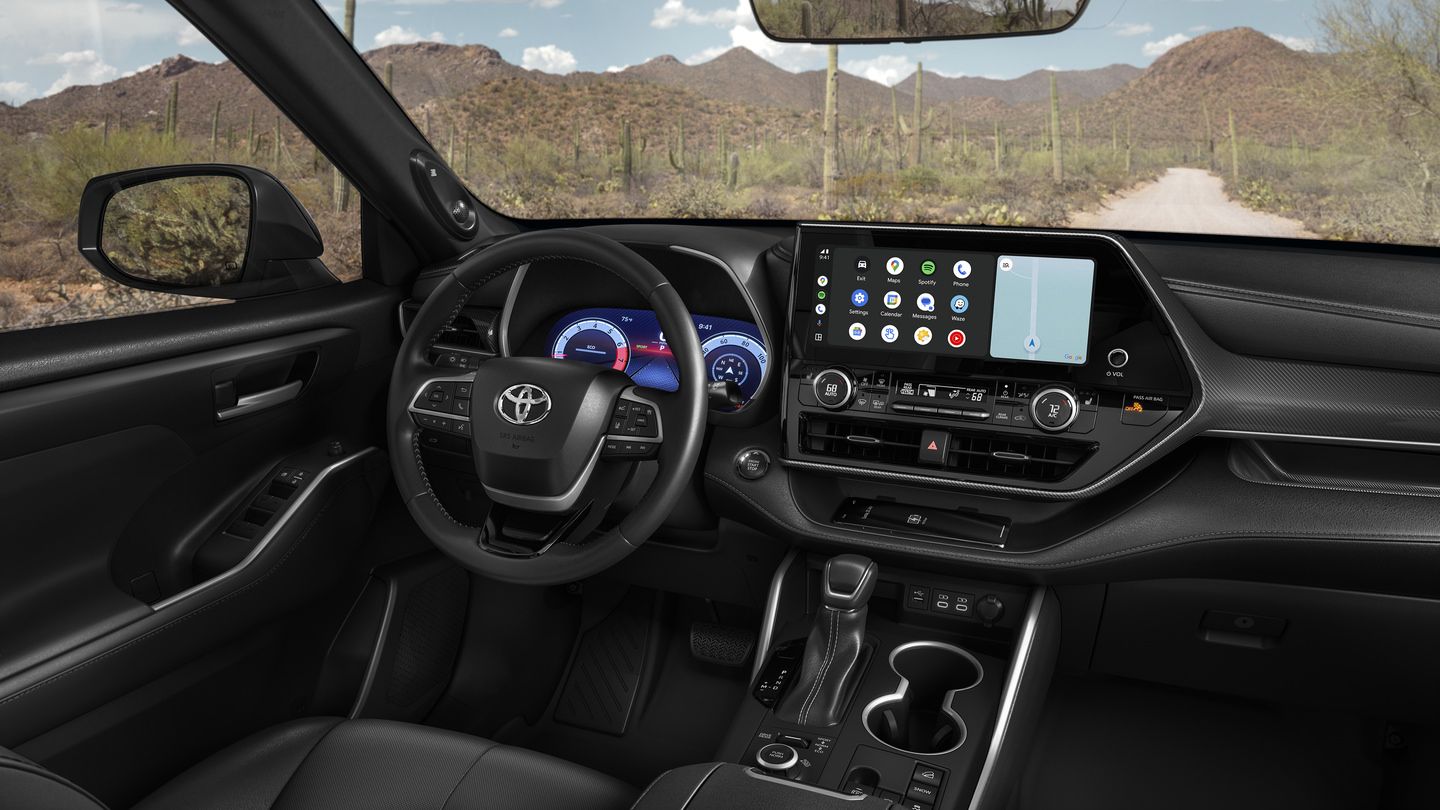
Highlander Hybrid XLE AWD
The XLE establishes the hybrid lineup's equipment baseline with an 8-passenger cabin featuring a second-row bench seat. Toyota Multimedia with Service Connect, Safety Connect, and Remote Connect services operates through an 8-inch display screen paired with a 6-speaker audio system.
Standard equipment includes 18-inch alloy wheels, chrome roof rails, three-zone independent automatic climate control, LED fog lamps, and an electronic parking brake. The third climate zone allows third-row passengers to set their own temperature, improving comfort on long trips.
Highlander Hybrid Limited AWD
The Limited upgrades to 7-passenger capacity by replacing the second-row bench with captain's chairs. The Toyota Multimedia system gains Drive Connect functionality and operates through a larger 12.3-inch touchscreen. Audio upgrades to a 1,200-watt JBL surround sound system with Clari-Fi technology and 11 speakers.
Additional features include a 12.3-inch digital gauge cluster, leather upholstery, heated and ventilated front seats with driver's seat memory, retractable side mirrors, premium LED headlamps, 20-inch alloy wheels, a panoramic moonroof, two 110-volt 1,500-watt high output power outlets, and Intelligent Clearance Sonar with Rear Cross Traffic Brake.
Highlander Hybrid Platinum AWD
The Platinum tops the hybrid lineup with unique 20-inch alloy wheels, a digital display rear view mirror that eliminates blind spots caused by rear headrests and cargo, heated second-row captain's chairs, the Bird's Eye View monitor for easier parking, rain-sensing wipers, a head-up display that projects key information onto the windshield, and Platinum-specific exterior and interior styling cues.
Towing Capacity: 1,588 kg (3,500 lbs)
The Highlander Hybrid's towing capacity is rated at 1,588 kg (3,500 lbs), lower than the gas model's 2,268 kg (5,000 lbs) rating. This capacity suffices for smaller utility trailers, lightweight camping trailers, or small watercraft—but families planning to tow larger trailers should consider the gas Highlander instead.
The hybrid's towing capacity limitation stems from the powertrain's focus on efficiency rather than maximum torque output. The electric motors provide strong low-end torque for everyday acceleration, but the system isn't optimized for sustained heavy-load towing.
Interior Space and Cargo Flexibility
The Highlander Hybrid provides the same interior dimensions as the gas model. Adult-sized seating spans all three rows, and cargo capacity reaches up to 2,387 litres (84.3 cubic feet) with the second and third rows folded.
The battery pack is mounted beneath the floor, so it doesn't intrude into cargo space or passenger areas. Eight-passenger XLE models use a second-row bench that accommodates three people, while seven-passenger Limited and Platinum models feature captain's chairs with an aisle to the third row.
The third row uses a 60/40 split, fold-flat design. When folded, the seat backs create a nearly level cargo floor. Second-row seats also fold to maximize cargo volume when transporting larger items.
Toyota Safety Sense 2.5 Across All Hybrid Models
Every Highlander Hybrid includes Toyota Safety Sense 2.5, which uses cameras and radar to monitor the road ahead. Pre-Collision System with Pedestrian Detection can detect vehicles, pedestrians, and cyclists, providing audible and visual warnings before automatically applying brakes if needed.
Full-Speed Range Dynamic Radar Cruise Control maintains a set distance from vehicles ahead, adjusting speed in traffic. The system works from a complete stop, making it useful during highway congestion. Lane Departure Alert with Steering Assist warns if the vehicle drifts from its lane and can provide corrective steering input. Lane Tracing Assist works with cruise control to help keep the vehicle centred in its lane.
Additional standard safety features include the Toyota Star Safety System (Vehicle Stability Control, Traction Control, Anti-lock Brakes, Electronic Brake-Force Distribution, and Brake Assist), a backup camera, Blind Spot Monitor with Rear Cross Traffic Alert, an anti-theft system, tire pressure monitoring with auto-location, and 8 airbags.
Who Should Choose the Highlander Hybrid?
The Highlander Hybrid suits families prioritizing fuel efficiency over maximum towing capacity. City-focused driving maximizes the hybrid advantage, as electric-only operation reduces gasoline consumption during stop-and-go traffic. The electronic AWD system provides winter traction without the mechanical complexity of traditional systems.
Drivers covering high annual mileage will recover the $3,200 premium over a gas XLE faster through fuel savings. Environmental considerations also play a role—the hybrid's lower emissions reduce environmental impact compared to traditional gas SUVs.
The XLE grade provides strong value with complete equipment, making it suitable for budget-conscious families. Limited and Platinum grades appeal to buyers wanting premium technology, improved audio systems, and enhanced comfort features. Seven-passenger configurations (Limited and Platinum) offer easier third-row access through captain's chairs.
Families planning regular trailer towing above 1,588 kg (3,500 lbs) should consider the gas Highlander instead, which offers a 2,268 kg (5,000 lbs) towing rating and stronger torque output for sustained heavy loads.
Experience the Highlander Hybrid at Belleville Toyota
The 2026 Toyota Highlander Hybrid delivers three-row versatility with electronic AWD and fuel economy rated at 6.7 L/100 km combined. For Belleville families seeking winter traction and reduced fuel costs, the hybrid offers a practical alternative to traditional gas SUVs.
Visit our team right here in Belleville to experience the Highlander Hybrid's electronic AWD system and hybrid powertrain. Our product specialists can demonstrate the differences between gas and hybrid models, explain electronic AWD operation, and help you determine which configuration matches your family's needs and driving patterns.